Why October Through December Are the Most Dangerous Months
If you’ve been driving around Zanesville for any length of time, you’ve seen those yellow deer crossing signs. And if you’re like most people, you might think they’re just a suggestion. Here’s the reality: those signs mark spots where deer collisions happen over and over again—and fall is when things get really dangerous.
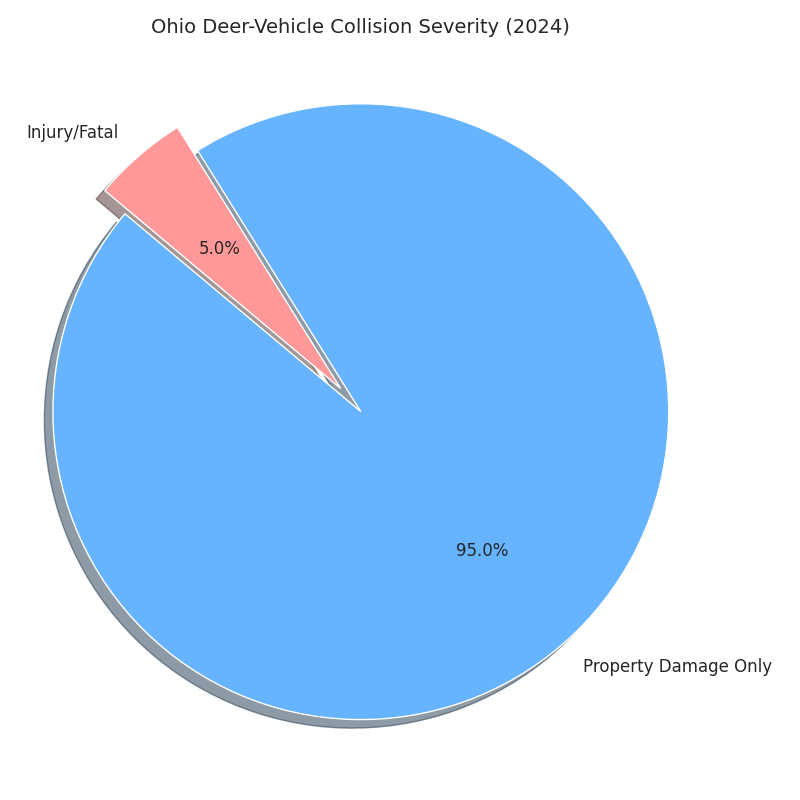
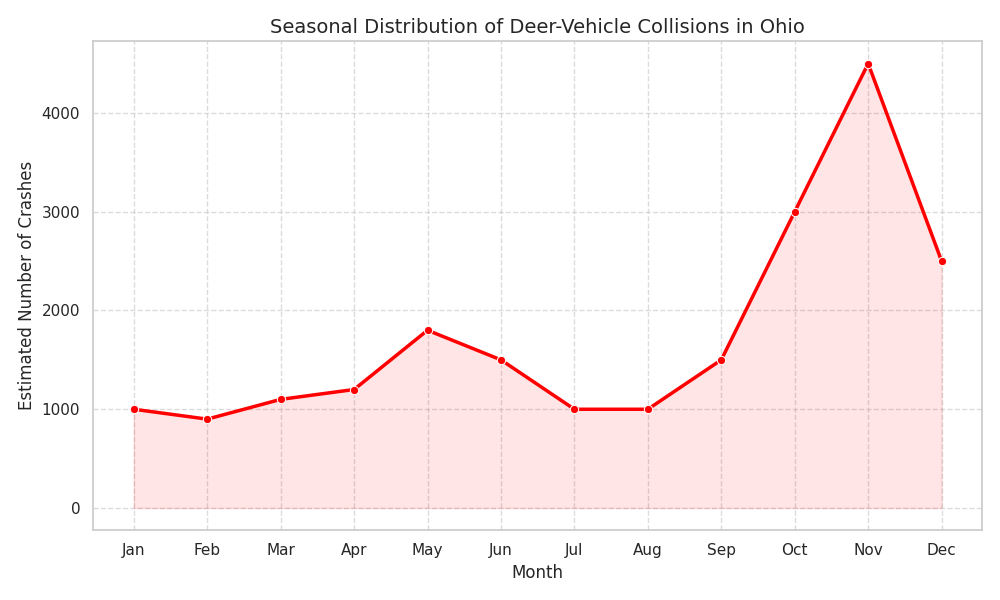
Between October and December, about half of Ohio’s deer crashes happen. We’re talking 17,000 to 20,000 collisions every single year across the state. Over the past five years, that’s added up to more than 108,000 incidents. While most of these result in damaged vehicles, around 5% involve injuries or deaths. In just one recent year, seven people in Ohio died after hitting deer.
What Makes Deer So Unpredictable in Fall?
Here’s what’s going on: fall is mating season for white-tailed deer (it’s called “the rut”). During this time, bucks are basically focused on one thing—chasing does. They’ll run across busy highways, through neighborhoods, and over roads they’d normally avoid, all with zero caution.
This means deer are moving at all hours and acting completely unpredictable. There’s a smaller uptick in collisions during late spring when young deer leave home for the first time, but nothing comes close to the fall danger.
When You Need to Be Extra Careful
Deer are most active at dawn and dusk—which, unfortunately, is exactly when most of us are commuting to and from work. The highest number of crashes happen between sunset and midnight, and again around sunrise.
If you’re on the road during these times, especially from October through December, you’re driving during the riskiest period of the entire year for hitting a deer.
How Ohio Compares to Other States
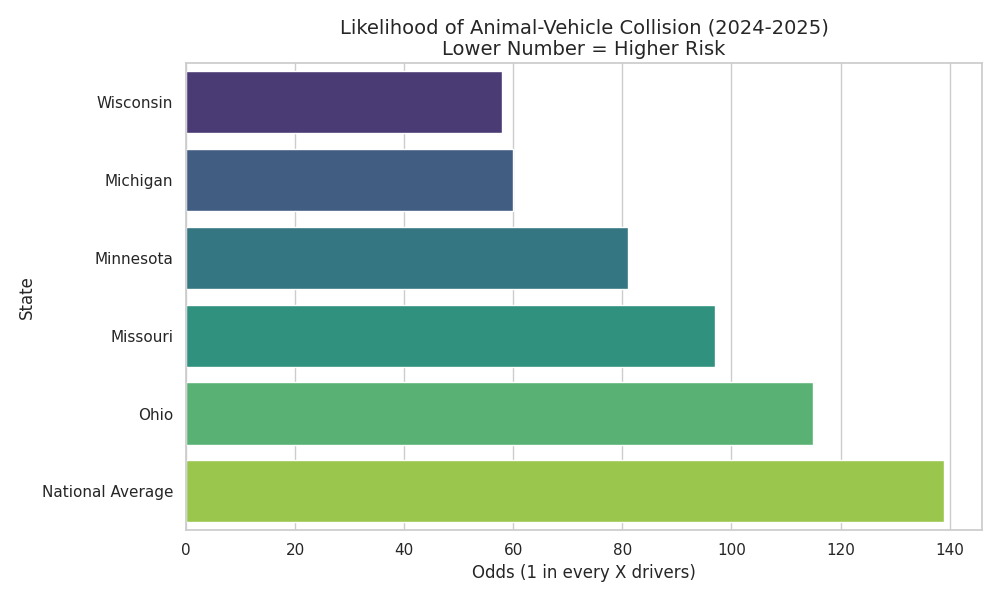
Ohio’s deer problem isn’t unique—it’s actually a Midwest thing. Our region has become the worst in the country for animal collisions. Here’s what the latest insurance data shows:
- Wisconsin: 1 in 58 drivers will hit an animal (ranked #3 in the nation)
- Michigan: 1 in 60 drivers (they had over 58,000 crashes in 2024, with 14 deaths)
- Minnesota: 1 in 81 drivers
- Missouri: 1 in 97 drivers
- Ohio: About 1 in 115 drivers
- National Average: 1 in 139 drivers
So if you’re driving around Zanesville, your odds of hitting a deer are much worse than the national average. Our area has the perfect combination of woods, farmland, and roads that creates lots of deer-vehicle encounters. We have healthy deer populations, which is great for wildlife—but it also means more chances for collisions.
Across the country, people filed 1.7 million insurance claims for animal collisions last year. That’s a huge number.
Why Deer Collisions Are Getting More Expensive
Beyond the obvious danger, hitting a deer is getting more and more expensive. Modern cars aren’t like the vehicles from 20 years ago. Today’s cars have sensors, cameras, and fancy safety systems built right into the front bumpers and grilles—exactly where a deer hits.
What used to be a simple bumper replacement can now mean fixing or recalibrating expensive electronics like:
- Forward collision warning sensors
- Adaptive cruise control
- Lane departure cameras
- Automatic emergency braking
- Headlight systems
All of this tech has pushed repair costs way up. For a lot of people, comprehensive insurance has gone from “nice to have” to absolutely necessary. Without it, one deer can cost you thousands of dollars out of pocket.
Five Things You Need to Do to Stay Safe
While there are long-term solutions being worked on (like wildlife crossings), your safety right now depends on following these proven tips from the Ohio State Highway Patrol:
1. Take Those Deer Signs Seriously
Those yellow deer crossing signs? They’re there because collisions happen in those exact spots all the time. When you see one, slow down and pay attention. These aren’t random—they’re based on actual crash data.
2. Slow Down During High-Risk Times
This is simple but effective: drive slower at dawn and dusk, especially in October, November, and December. Going even 10 mph slower gives you way more time to react and can mean the difference between a fender bender and a totaled car.
3. Use Your High Beams When You Can
At night, use your high beams whenever there’s no oncoming traffic. The light reflects off deer eyes and gives you a heads-up that they’re near the road. That reflection might be your only warning before a deer jumps into your path.
4. If You See One Deer, Expect More
Deer rarely travel alone. If you spot one crossing the road, there are probably others about to follow. Slow way down and watch both sides of the road carefully. A lot of crashes happen because someone relaxes after the first deer passes, then hits the second or third one right behind it.
5. Brake Hard—Never Swerve
This is the most important rule: if you’re about to hit a deer, hit your brakes hard and stay in your lane. Don’t swerve.
We know the instinct is to swerve, but here’s the thing—swerving is way more dangerous. You can lose control, roll your vehicle, hit a tree, or end up in oncoming traffic. These kinds of crashes are almost always worse than just hitting the deer. The statistics prove it: swerving-related crashes cause way more injuries and deaths than the deer collision you were trying to avoid.
If You Do Hit a Deer
Even if you do everything right, you might still hit a deer. Here’s what to do:
- Pull over safely if your car still drives. Turn on your hazard lights.
- Don’t go near the deer. Even if it looks dead, it might not be. Injured deer can be dangerous.
- Call the police to make a report. You’ll need this for insurance.
- Take photos of everything—your car, the scene, and the deer if you can see it.
- Call your insurance company even if the damage looks minor. There might be hidden damage you can’t see.
One important thing to know: deer collisions are covered under comprehensive insurance, not collision coverage. If you only have liability insurance, you’re paying for repairs yourself.
Why You Should Get Your Car Checked by a Pro
Modern cars are complicated. What looks like just a dented bumper might actually be hiding serious problems:
- Frame damage
- Broken cooling systems
- Damaged sensors that need recalibration
- Electrical problems
Getting your car checked by a professional repair shop makes sure everything—even the stuff you can’t see—gets fixed properly. Driving around with hidden damage just puts you at more risk down the road.
The Bottom Line
Look, deer collisions are a real problem in the Zanesville area, especially in fall. But the good news is that you can protect yourself by knowing when the danger is highest and adjusting how you drive.
The data shows the same patterns every year, so we know when to expect trouble. Slow down during dawn and dusk from October through December, pay attention to warning signs, and remember the golden rule: if you’re about to hit a deer, brake hard and don’t swerve.
Fall is beautiful around here, but it’s also when our roads are most dangerous. Stay alert, drive smart, and stay safe out there.
Related Reading:
Where This Information Comes From
Ohio Crash Data
- Ohio State Highway Patrol / Ohio Department of Public Safety
https://dam.assets.ohio.gov/image/upload/statepatrol.ohio.gov/DeerCrashBulletin_2024.pdf - Ohio State Highway Patrol Statistics
https://statepatrol.ohio.gov/statistics-and-data/statistics-by-topic/deer-crashes
National Data
- State Farm Insurance Claims Analysis (July 2024 – June 2025)
https://newsroom.statefarm.com/new-state-farm-data-reveals-fewer-animal-collisions-but-autumn-months-remain-most-dangerous/ - Michigan Traffic Crash Facts 2024
https://publications.michigantrafficcrashfacts.org/2024/Deer.pdf
Safety Guidelines
- Ohio State Highway Patrol Traffic Safety Bulletin
https://dam.assets.ohio.gov/image/upload/statepatrol.ohio.gov/DeerCrashBulletin_2024.pdf
Additional Research
- Insurance Institute for Highway Safety
https://www.iii.org/fact-statistic/facts-statistics-deer-vehicle-collisions - Defenders of Wildlife
https://defenders.org/sites/default/files/publications/methods_to_reduce_traffic_crashes_involving_deer.pdf
All statistics are from official government sources or major insurance companies, published in 2024-2025.